| Understanding the Dopamine Loop
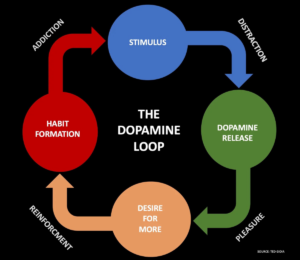
One way to understand addiction is through the brain’s reward system, often called the dopamine loop. A substance (such as alcohol or drugs) or behavior (such as gambling or watching pornography) provides temporary pleasure, relief, or escape. This causes the brain to release dopamine, a neurotransmitter involved in motivation and reward. Because the experience feels good, or provides relief from emotional pain, the brain begins to associate the behavior with feeling better.
Over time, the cycle repeats: Stress or emotional discomfort → Substance or behavior → Dopamine release → Temporary relief → Stronger cravings → Repeat. As this pattern continues, the brain begins to expect the reward, making it increasingly difficult to stop even when the individual recognizes the harmful consequences.
Types of Addiction:
Addiction can involve both substances and behaviors.
- Substance addictions include:
- Alcohol
- Nicotine and tobacco products
- Marijuana/Cannabis
- Prescription medications
- Opioids
- Cocaine
- Methamphetamine
- Other illicit drugs
- Behavioral addictions may include:
- Gambling
- Shopping
- Internet or gaming
- Pornography
- Other repetitive behaviors that activate the brain’s reward system
Although the behaviors differ, both types of addiction affect similar brain pathways and can significantly interfere with daily life.
Warning Signs of Addiction
Addiction often develops gradually. Some common warning signs include:
- Neglecting responsibilities at work, school, or home
- Significant mood changes, including increased irritability, anxiety, or depression
- Needing larger amounts of a substance or more frequent engagement in a behavior to achieve the same effect (tolerance)
- Hiding or lying about substance use or behaviors
- Continuing despite negative consequences
- Changes in sleep, appetite, hygiene, or overall physical health
- Difficulty cutting back despite repeated attempts
Recognizing these signs early can make it easier to seek support before the addiction becomes more severe.
Harm Reduction: Meeting People Where They Are
Recovery looks different for everyone. While abstinence is one pathway, another evidence-based approach is harm reduction. Harm reduction is a practical, compassionate approach that focuses on reducing the negative consequences associated with substance use rather than requiring someone to stop immediately. The National Harm Reduction Coalition emphasizes meeting people where they are, recognizing that change often happens gradually and that every positive step matters. Examples of harm reduction include:
- Carrying Narcan (naloxone) and knowing how to use it in case of an opioid overdose
- Calling 911 immediately if an overdose is suspected
- Avoiding using substances alone
- Knowing what and how much you are consuming
- Checking in with yourself before using by asking:
- Why am I using right now?
- What emotion am I trying to avoid?
- Have I eaten, slept, or taken care of myself today?
- Is this helping me cope, or creating more problems?
- Who can I reach out to if I’m struggling?
These questions are intended to increase awareness and encourage safer decision-making.
Resources in the Capital Region
If you or someone you know is struggling with addiction, support is available. You do not have to face it alone. Some local resources include:
- Capital EAP : Confidential counseling, support, and referrals for individuals and families.
- Albany County Department of Mental Health: Substance use treatment referrals and community resources.
- Hope House: Outpatient and residential substance use treatment services.
- Equinox : Addiction treatment, recovery services, and crisis support.
- New York State Office of Addiction Services and Supports (OASAS) : Treatment locator and recovery resources throughout New York.
If someone is experiencing an overdose, call 911 immediately and administer Narcan if available.
Recovery is Possible
Addiction can affect anyone, but it does not define a person’s worth. Whether someone is questioning their own substance use, concerned about a loved one, or looking for additional support, help is available. At Capital EAP, we believe in meeting people with compassion, not judgment. Recovery is not about perfection, it is about taking the next step toward a healthier and more fulfilling life.
If you’re wondering whether your substance use or behaviors may be becoming problematic, take a few moments to complete the following self-assessment questionnaire. It can help you reflect on your current habits and identify whether it may be time to seek additional support. https://screening.mhanational.org/screening-tools/addiction/?layout=actions_b |
 Many people think addiction is simply a lack of willpower, but addiction is a complex condition that affects both the brain and behavior. It can impact anyone, regardless of age, background, or life experiences. Understanding how addiction develops, recognizing the warning signs, and knowing where to seek support can help reduce stigma and encourage individuals to seek help sooner.
