
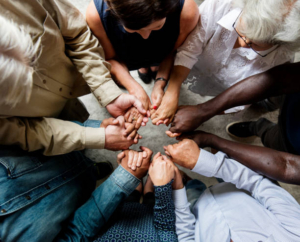
 Did you know that when a bug attacks one tree, they use their roots to send out chemical signals to surrounding trees to help gear up their defense? Or that research shows that trees that grow alone get access to more resources like sunlight, soil, and water; they are significantly more likely to get uprooted due to strong winds? However, trees in the forest are more likely to stay grounded due to a well-connected and established root network. Why all this talk about trees? Well, as we recognize the trees changing in the fall season, we can also consider some valuable lessons from trees about building and remaining our own roots in community.
September can be a time of intense transition. There is an increase in responsibilities of getting kids to school, planning fall events, or taking on a heavier workload. In addition to the slow but sure decline in weather. These factors combine to discourage us from building and engaging with our communities, leading to a sense of isolation.
This can be problematic because humans are designed to be social creatures. We often find more opportunities to thrive when we are around and connected with others. This is why the long-term effects of isolation lead to symptoms of depression, elevated anxiety and stress, and are associated with increased risk of health conditions like dementia. The long-term effects of being in community are known to reduce stress, build resilience, and lower the risk of health diseases.
Building your community starts with defining what community means to you. Unlike trees, which are often planted in random environments, we are empowered to choose whom we want to be a part of our community. To help better define what community looks like for us, we may want to ask ourselves:
- What aspect of my identity do I want to connect with others?
- What hobbies or interests do I want to share with others?
- Who can help support the goal I am trying to achieve?
The idea is that understanding and exploring our inner values will help guide us to seek out the community we want to build and join around us.
The fun aspect of community is that it can be anywhere where others are! One popular place to find and build community is within third spaces. Third spaces are places that are apart from home and work where we choose to relax, unwind, and meet with others. These spaces are often connected to hobbies we take part in, for example:
- Libraries
- Gyms
- Coffee shops
- Barbershops
- Churches
- Parks
- Recreation centers
Now, since technology has advanced, these spaces can also be found online through video games, social media apps, and live streaming. Engaging with these third spaces can help with building your community.
In addition, using a site like https://www.meetup.com/find/us–ny–albany/ can help in finding local community events that fit your interests and find like-minded individuals. Finally, volunteering is an effective way to build community while also experiencing satisfaction of giving back to the community through engaging in service that we love.
At Capital EAP, we value offering tools and techniques to help individuals build and become rooted in their communities. If you find you need encouragement or to take the first step out of isolation, feel free to call intake at 518-465-3813 to schedule an appointment. We would love to help.
Written By: Judeson Luctamar, MHC Intern